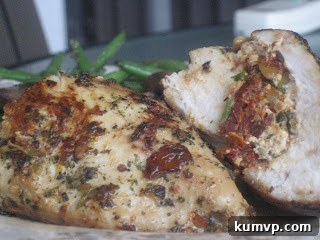
Gourmet Stuffed Chicken Breasts: A Culinary Journey with Goat Cheese, Sun-Dried Tomatoes, and Fresh Herbs
Embark on a delightful culinary adventure with a dish that combines elegance with surprisingly simple preparation: gourmet stuffed chicken breasts. This recipe transcends the ordinary, transforming a common staple into an impressive centerpiece meal. At its heart lies the harmonious fusion of tangy goat cheese, vibrant sun-dried tomatoes, and a medley of aromatic fresh herbs, creating a symphony of flavors and textures in every bite. Whether you’re a seasoned home chef or looking to impress guests with minimal fuss, this versatile technique and flavor profile are sure to become a cherished addition to your recipe collection.
The Allure of Goat Cheese: A Tangy Twist
Goat cheese, or chèvre as it’s known in French, is a remarkably versatile dairy product renowned for its distinctive flavor profile. Unlike the more common cow’s milk cheeses, goat cheese offers a unique tanginess, often described as bright, earthy, and sometimes a little tart. Its texture varies widely, from soft, crumbly logs that are perfect for spreading or stuffing, to harder, aged varieties. For this recipe, we’ll be focusing on the fresh, soft logs – a popular choice readily available in most specialty cheese sections, often found near the deli or gourmet aisles of larger supermarkets and warehouse clubs. Its creamy consistency melts beautifully, infusing the chicken with a luxurious, slightly pungent flavor that is utterly irresistible.
Historically, goat cheese has been produced for thousands of years, prized for its digestibility and its ability to capture the essence of the terroir where the goats graze. It pairs exceptionally well with a variety of ingredients, from sweet fruits and honey to savory herbs and robust vegetables. Its ability to hold its shape while cooking, yet become wonderfully tender and slightly molten, makes it an ideal candidate for stuffing lean protein like chicken breasts. If you’ve never experimented with goat cheese before, this recipe offers a perfect introduction to its delightful complexities.
Inspiration Strikes: Crafting the Perfect Stuffed Chicken
The inspiration for this particular rendition of stuffed chicken breasts came from a memorable cooking show, where the technique of creating a pocket within the chicken and filling it with delectable ingredients was highlighted. While that episode featured Fontina cheese with sun-dried tomatoes and herbs, the concept immediately sparked an idea to explore the bold and beautiful flavors of goat cheese. This technique is not only straightforward but also incredibly adaptable, allowing for endless creative variations based on your preferences or what you have on hand. It’s a method that empowers you to transform simple ingredients into a gourmet experience.
The beauty of stuffing chicken is twofold: it locks in moisture, ensuring a tender and juicy result, and it allows for a concentrated burst of flavor in every bite. By carefully preparing a pocket, you create a culinary canvas ready to be adorned with your chosen fillings. This approach is far more engaging and rewarding than simply topping a chicken breast, as the stuffing becomes an integral part of the chicken itself, rather than just an accompaniment.
Mastering the Stuffing Technique: Simple Steps for Success
Creating the perfect pocket in a chicken breast might seem daunting at first, but with a sharp paring knife and a little care, it’s remarkably simple. The goal is to create a generous cavity without piercing through the chicken, ensuring your delicious filling stays securely nestled inside during cooking. Here’s a step-by-step guide to mastering this technique:
- Prepare Your Workspace: Start with boneless, skinless chicken breasts. Pat them dry thoroughly with paper towels. This helps with handling and ensures better browning later.
- Initiate the Slit: Lay a chicken breast flat on a cutting board. Using a small, sharp paring knife, make a horizontal slit about 1.5 to 2 inches long into the thickest side of the chicken breast, roughly halfway down from the top edge. Avoid cutting all the way through the chicken. Think of it as creating an entrance for your knife.
- Form the Pocket: Once the initial slit is made, gently insert the knife into the opening. Carefully work the knife horizontally within the breast, fanning it out to create a deep, wide pocket. Use a gentle back-and-forth motion, being mindful not to cut through the bottom or sides of the chicken. You want a spacious cavity that can hold a good amount of filling. Some chefs find it helpful to use their other hand to gently press down on the top of the chicken breast, helping to guide the knife and feel the thickness of the chicken.
- Inspect and Refine: Once you feel you have a sufficient pocket, gently open it up with your fingers to inspect its size and ensure there are no unintended perforations. A well-formed pocket will be deep and wide enough to accommodate your stuffing without overfilling.
- Prepare for Stuffing: Once all your chicken breasts have their pockets, they are ready for your chosen filling.
This technique is a fundamental skill that opens up a world of possibilities for customizing your chicken dishes. From savory to sweet, the options for stuffing are truly endless once you’ve mastered the pocket.
The Heart of the Dish: A Flavorful Goat Cheese Stuffing
For our specific recipe, the “stuffing” is a vibrant, aromatic blend that perfectly complements the chicken. It’s a combination designed to deliver a burst of flavor and a creamy texture with every forkful. Here’s what goes into our goat cheese filling:
- Goat Cheese: The star of the show. Its fresh, tangy profile provides a wonderful contrast to the lean chicken. We use about half of a standard log for five chicken breasts, ensuring ample creaminess.
- Sun-Dried Tomatoes (Julienned, in Olive Oil): These concentrated gems bring a deep, sweet-savory umami flavor and a lovely chewiness. Opting for those packed in olive oil adds another layer of richness and moisture to the stuffing. If whole, simply chop them into smaller, manageable pieces.
- Fresh Herbs: The garden’s bounty truly shines here. A mix of oregano, parsley, and thyme provides a fresh, earthy, and aromatic lift. Fresh herbs are highly recommended for their vibrant flavor and fragrance, but high-quality dried Italian herbs can be used as a substitute in a pinch (use about one-third the amount of dried herbs compared to fresh).
- Toasted Pine Nuts: These add a delicate crunch and a buttery, slightly resinous flavor that elevates the stuffing. Toasting them gently in a dry skillet beforehand intensifies their flavor and aroma.
- Seasoning: A simple pinch of salt and freshly ground black pepper is all that’s needed to tie these flavors together, enhancing the natural deliciousness of each component.
Preparing the Stuffing:
In a medium bowl, crumble the goat cheese. Add the julienned sun-dried tomatoes (draining any excess oil if desired, though a little oil adds moisture), the chopped fresh herbs, and the toasted pine nuts. Season with a small amount of salt and a generous grind of fresh black pepper. Using clean hands (or a spoon, if you prefer, but hands allow for better mixing and incorporation), gently combine all the ingredients until uniformly distributed. This ensures that every bite of your stuffed chicken is packed with flavor.
Stuffing the Chicken: The Final Step Before Cooking
With your pockets prepared and your stuffing mixed, it’s time to bring them together. Carefully scoop a portion of the goat cheese mixture and, using your fingers, gently push it into each chicken pocket. Don’t overstuff; aim for a generous but manageable amount that allows you to close the opening without excessive pressure. Once filled, secure the opening of each chicken breast with one or two toothpicks. These act as little culinary pins, preventing the delicious filling from escaping during the cooking process. Be sure to remind yourself, or anyone you’re serving, to remove the toothpicks before eating!
Seasoning the Exterior: Building Layers of Flavor
While the interior of the chicken is bursting with flavor, the exterior also deserves attention. A simple yet effective seasoning blend creates a delicious crust and enhances the overall savory profile. You can opt for a classic mix of salt, freshly ground pepper, dried Italian herbs, and garlic powder, mixed with a little olive oil to form a paste. This mixture is then generously rubbed all over the surface of each stuffed chicken breast.
Alternatively, if you have access to specialty seasoning blends, they can add an exceptional touch. For instance, a dehydrated spice mix made from sun-dried tomatoes, garlic, onion, and Italian herbs, rehydrated with warm water and then mixed with olive oil, creates a wonderfully aromatic coating. These artisanal blends often provide a depth of flavor that can truly elevate the dish, making it even more memorable. The key is to ensure the chicken is thoroughly coated, as this layer will contribute significantly to the golden-brown crust and seasoned outer layer.
The Art of Cooking: Pan-Searing and Roasting to Perfection
Our cooking method involves a combination of pan-searing and oven-roasting, a technique that yields beautifully browned exteriors and perfectly cooked, juicy interiors. This dual approach ensures both flavor development and even cooking.
- Preheat and Prepare: Preheat your oven to 400°F (200°C). Heat a large, oven-safe nonstick skillet over medium-high heat. If you don’t have an oven-safe skillet, you’ll need to transfer the chicken to a baking dish after browning. Add a few tablespoons of olive oil to the hot skillet and swirl to coat the bottom.
- Sear for a Golden Crust: Carefully place the seasoned, stuffed chicken breasts into the hot skillet. Allow them to brown for approximately 4-5 minutes per side. This searing process creates a delicious, caramelized crust and locks in the juices, contributing significantly to the chicken’s flavor and texture. Resist the urge to move the chicken too early; let it develop a deep golden-brown color before flipping.
- Finish in the Oven: Once both sides are beautifully browned, transfer the skillet (or chicken in a baking dish) to the preheated oven. Continue cooking for another 15-20 minutes, or until the internal temperature of the thickest part of the chicken reaches 165°F (74°C). An instant-read thermometer is your best friend here to ensure perfectly cooked chicken without drying it out.
- Rest the Chicken: Once cooked, remove the chicken from the oven and transfer it to a cutting board or plate. Tent loosely with foil and let it rest for about 5 minutes. This crucial resting period allows the juices to redistribute throughout the meat, resulting in a more tender and succulent chicken.
Crafting the Pan Sauce: A Flavorful Finale
While the chicken rests, utilize the flavorful pan drippings to create a quick and exquisite sauce. This step elevates the dish from great to extraordinary.
- Deglaze the Pan: Place the skillet (remember to use oven mitts, as the handle will be extremely hot from the oven) back on the stovetop over medium heat. Pour in about 1 cup of dry white wine (such as Sauvignon Blanc or Pinot Grigio). If you used a separate baking dish for the oven, transfer any drippings from the baking dish back into the original skillet for maximum flavor.
- Reduce the Sauce: Bring the wine to a simmer, scraping up any browned bits from the bottom of the pan with a wooden spoon. These “fond” bits are packed with flavor. Allow the wine to cook and reduce, simmering gently until it thickens slightly and the alcohol has cooked off. This process concentrates the flavors into a rich, aromatic sauce.
- Serve: Spoon the warm pan sauce generously over the rested, sliced (or whole) chicken breasts.
This simple pan sauce adds a layer of sophistication and moisture, perfectly complementing the rich stuffing and tender chicken. For those who prefer to avoid alcohol, chicken broth or vegetable broth can be used as a flavorful substitute for the white wine.
Serving Suggestions: Completing Your Gourmet Meal
This gourmet stuffed chicken breast deserves to be paired with sides that complement its rich flavors without overpowering them. Here are some delightful suggestions:
- Green Beans and Sautéed Mushrooms: A classic and healthy combination. Quickly sauté fresh green beans and sliced baby portabella mushrooms in olive oil with a pinch of salt and pepper. The earthiness of the mushrooms and the crispness of the beans provide a lovely textural contrast.
- Chopped Tomato Salad: A simple, refreshing salad featuring diced ripe tomatoes, dressed with balsamic vinegar, salt, and pepper, offers a bright, acidic counterpoint to the creamy chicken. Adding a sprinkle of fresh basil or oregano would enhance its freshness.
- Creamy Risotto: For a more indulgent meal, a creamy Parmesan risotto or a mushroom risotto would be a fantastic pairing, absorbing the delicious pan sauce.
- Roasted Asparagus or Broccoli: Simply tossed with olive oil, salt, and pepper, then roasted until tender-crisp, these vegetables provide a healthy and appealing accompaniment.
- Quinoa or Couscous: Light and fluffy grains like quinoa or couscous can serve as a perfect base to soak up any extra sauce.
Beyond the Recipe: Embracing Culinary Creativity
What truly makes this meal special is its foundation in technique rather than rigid adherence to a specific recipe. Once you’ve mastered the art of creating and stuffing a chicken pocket, an entire world of culinary possibilities opens up before you. Experiment with different cheeses – feta, mozzarella, or even a spicy pepper jack. Explore various vegetable combinations – spinach and artichoke, roasted red peppers and onions, or finely diced zucchini. Introduce different herbs, spices, or even a touch of pesto for an Italian twist. The adaptability of this method means you can tailor it to suit any palate, any occasion, and any ingredients you have on hand.
This stuffed chicken breast isn’t just a meal; it’s a testament to how simple techniques, combined with thoughtful ingredient choices, can elevate everyday cooking into something truly extraordinary. It’s an impressive dish perfect for entertaining, yet simple enough for a weeknight family dinner. Enjoy the process, savor the flavors, and delight in the knowledge that you’ve created a truly gourmet experience right in your own kitchen.